


The Data Is Clear: Graduate Student Mental Health Remains the Greatest Need
Graduate students still carry one of the heaviest burdens on campus. What the research shows, and how Grad Resources is responding.
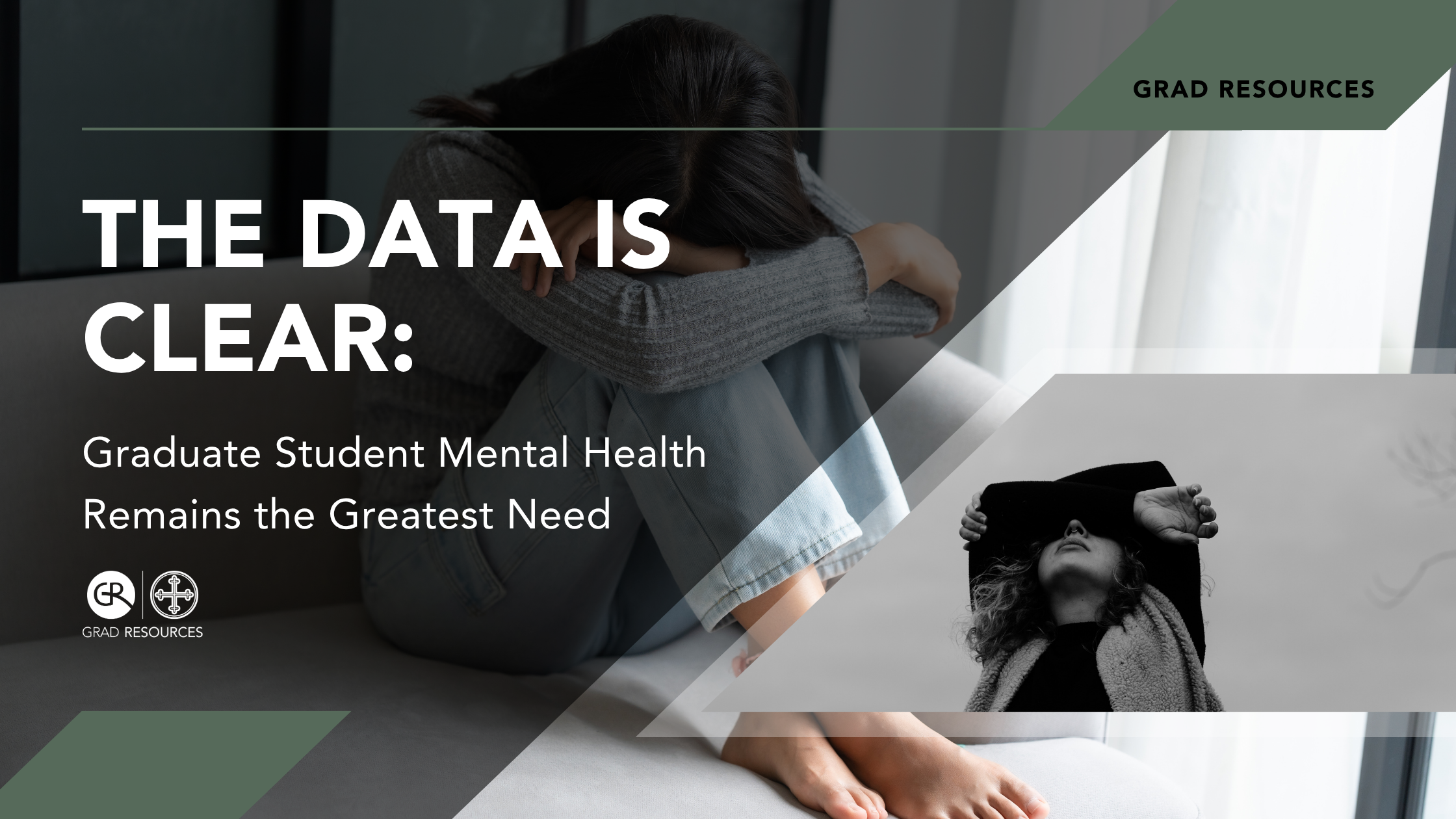
When Grad Resources began serving graduate students in 1990, the world looked very different. There were no smartphones, no remote work, and no constant connectivity. If you needed research at 2 a.m., you went to the library.
Yet despite everything that has changed, the weight graduate students carry has stayed remarkably the same. Graduate students, often high-achieving future leaders, were quietly carrying one of the heaviest burdens on campus: psychological stress. More than three decades later, that has not changed.
A persistent and growing challenge
Recent research keeps confirming what was first uncovered decades ago. Studies show graduate students experience significantly higher rates of anxiety, depression, and psychological distress than the general population. Up to half of graduate students report symptoms of depression, anxiety, or burnout during their training.
Across broader student populations, the Healthy Minds Study finds more than 60 percent of students report overwhelming anxiety. Graduate students in particular face intense academic pressure, isolation, and limited support, which makes them uniquely vulnerable.
These challenges do not stay contained. They affect academic performance, career paths, relationships and families, and long-term well-being.
Why this matters more than ever
Graduate students are the next generation of leaders in research, industry, healthcare, education, government, and ministry. To ignore their psychological health is to ignore the future.
Health, both psychological and physical, is one of the Big Six Needs of graduate students, and it surfaces year after year. At Grad Resources, we believe this is not just a challenge to acknowledge. It is a responsibility to act.
A renewed commitment in 2026
A Task Force for the Psychological Health of Grad Students and Their Families
We are launching a task force that brings together graduate students, faculty, researchers, chaplains, medical practitioners, and partners like Boys Town, with a shared belief: we are better working together. It has three goals:
- Share a diversity of knowledge, perspectives, and resources for greater impact.
- Understand how needs are changing and how best to serve them.
- Work together to develop and deploy new solutions.
Expanding our partnership with Boys Town
With Boys Town, which operates the National Grad Crisis Line, we are improving data analysis, strengthening services, and expanding awareness.
Relaunching coaching and mentoring
We are refining and relaunching our coaching and mentoring programs to meet today's graduate students where they are.
Expanding resources and referrals
We are growing our network of care through expanded online resources, strategic partnerships, and trusted referral pathways.
Equipping those closest to graduate students
We are building training and best-practice playbooks for chapter leaders and faculty sponsors, because lasting care happens when the whole community around a student is equipped to respond.
A legacy, and a future, of care
Concern for the psychological health of graduate students has been part of our DNA from the start. When research in 1989 revealed the stress and isolation graduate students were carrying, it did not just inform our work. It defined it.
In 1999, we helped launch the National Grad Crisis Line with Boys Town, a 24/7 lifeline for students in their most critical moments. As needs grew, we developed remote coaching and mentoring to reach students nationwide, and expanded access to care through BetterHelp, connecting students to free online counseling wherever they are.
At every stage, the approach has stayed the same: we listen, we adapt, and we build. The need has not changed, and neither has our resolve.
Join us
The greatest reported need of graduate students has stayed the same. Our response cannot. Help us meet it head on: become a mentor, coach a chapter, or give.
If anything here touches something heavy for you, you do not have to carry it alone. Someone will answer day or night.












Want someone to walk through this with you?
Find a mentor in your field or find your people on campus.